Walk a coastal garden after a westerly gale and the damage is easy to read: scorched leaf edges, a grey film on the greenhouse glass, a pale crust on the soil behind the wall. Two things are usually responsible. Salt arrives on the wind, and lime is often already in the ground. They behave differently and need different responses, and mixing the two up is the commonest mistake made on plots within a mile or so of the shore.
Understanding the distinction is the first step. Salinity is a temporary, weather-driven problem that can be flushed away. Alkalinity is a long-term soil property that needs managing year after year. Treat them as the same thing and you will either waste money on lime for a soil that already has too much, or try to acidify a salt-affected bed that simply needs a good soak. This explainer sets out how each works, how to tell them apart, and what to do about both.
What salt spray does to your soil
Sea spray is not just water. It carries sodium, chloride, magnesium and calcium salts, and when wind drives it inland it settles on leaves, walls and topsoil. The water evaporates; the salts stay. Each gale adds a little more, so exposed ground becomes noticeably saltier than ground a few hundred metres inland. A single storm can deposit the equivalent of a light dusting of fertilizer — except that this “fertilizer” is the wrong sort, and it arrives when plants least expect it.
Two things follow. The chemical effect is that sodium competes with potassium, calcium and magnesium for space on the soil's exchange sites, so plants can run short of nutrients that are physically present. On heavy clay, sodium can also nudge the structure towards stickiness and poor drainage, though at garden scale this is usually mild. In sandy soils, the effect is more often simple leaching of nutrients, because sand holds few exchange sites to begin with.
The physical effect is the one you notice first. Roots find it harder to pull water from salty soil, because dissolved salts work against them. A plant can stand in damp ground after a gale and still look drought-stressed: limp, dull, browned at the margins on the seaward side. Conifer needles brown at the tips. Evergreen leaves curl and drop. Even lawn grass can take on a blue-grey tinge and stop growing.
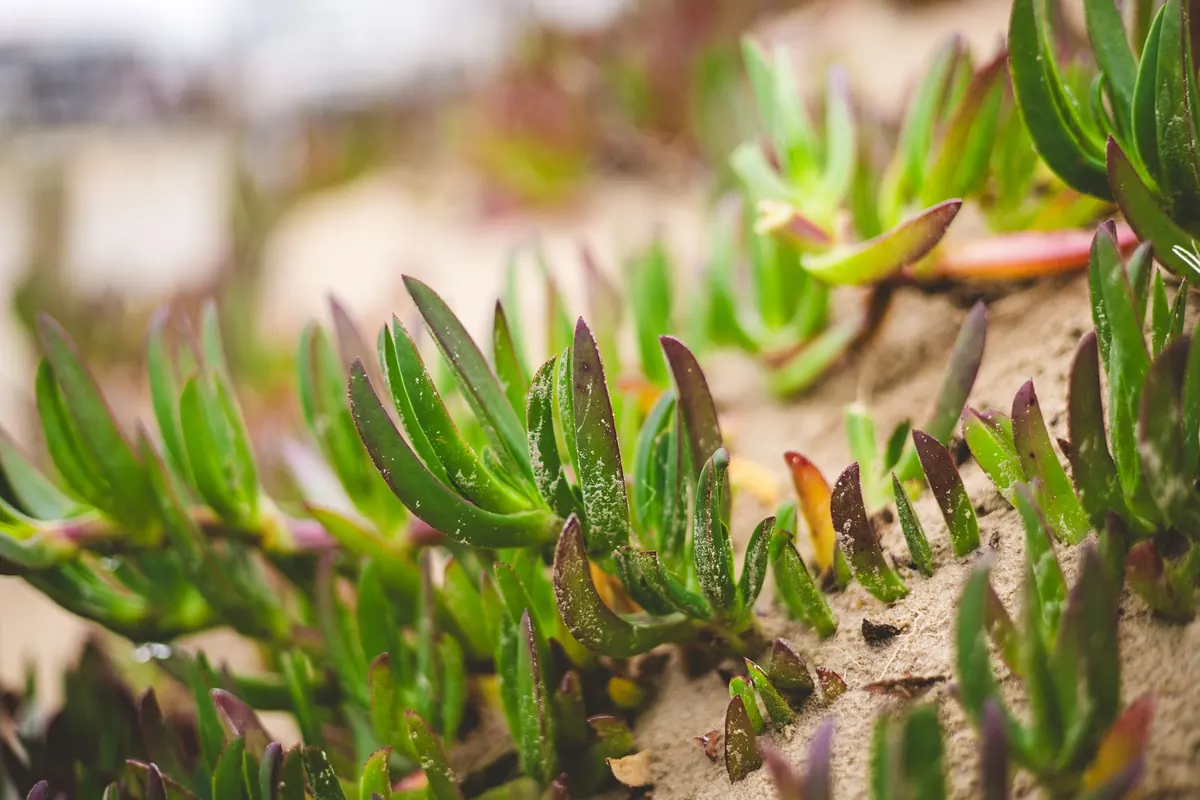
Salt on the leaves does direct damage too, burning tissue where spray landed and dried. That is why the seaward face of a hedge scorches while the sheltered side stays green. It is also why plants with waxy or hairy leaves — think lavender, rosemary, or sea holly — tend to fare better than soft, large-leaved plants like courgettes or hydrangeas.
Lime, shells and the pH question
Plenty of coastal soils are alkaline, and for obvious reasons. Chalk and limestone bedrock, shell sand blown inland from the beach, sea-derived calcium carbonate in the subsoil, hard tap water, even old lime mortar and concrete footings can all push pH upwards. Values of 7.5 to 8.5 are common on the south and east coasts. If you garden on the Jurassic coast or along the chalk downs of Kent, you can almost take alkalinity for granted.
Not every coastal plot is limey, though. Sandy soils on the west coast and in Scotland are often neutral or mildly acidic, because heavy rainfall leaches calcium away. That is why testing beats assuming. A garden in Cornwall may sit at pH 5.5 while one in Norfolk sits at 8.2, yet both are within sight of the sea.
Reading the signs
Yellow leaves with green veins — iron chlorosis — on roses, hydrangeas or camellias is the classic sign of a soil that is too alkaline. Growth is short-jointed, flowers are small, and feeding seems to make no difference. On a dry, exposed plot, look instead for scorched margins on the windward side and plants that wilt in the evening even after rain. If you see both sets of symptoms, you probably have saline, alkaline soil — a double challenge that demands a combined approach.
What pH and salt do to nutrient uptake
Above roughly pH 7.5, iron, manganese, zinc, copper and boron become less available, and phosphorus starts binding with calcium into forms roots cannot use. Below pH 6, phosphorus and molybdenum become harder to access and calcium and magnesium leach away more quickly. Most vegetables and ornamentals prefer a slightly acidic to neutral range, around pH 6.0 to 7.0, where the widest range of nutrients is soluble.
Salinity works differently, by competition and osmosis rather than by locking minerals away. Sodium crowds out potassium and calcium at the root surface, so fruit set suffers and leaf edges burn. Chloride accumulates in older leaves and shows up as tip scorch. Because every nutrient has a pH band where it is most available, a limey plot demands more thought than a neutral one. You may need to apply chelated iron or sequestrene, for example, rather than ordinary iron sulphate, which becomes unavailable at high pH.
Testing your own plot in an afternoon
You do not need a laboratory. A few simple checks will tell you most of what you need:
- pH. A liquid or tablet soil-test kit is accurate enough for gardening decisions. Sample two or three spots — the bed by the sea wall and the sheltered border will often differ by half a point.
- Salinity. A basic soil EC meter gives a rough reading, but the trend matters more than the number. Test after a gale and again after a week of rain to see how quickly your soil recovers.
- Structure. Squeeze a damp handful. Soil that slumps into a sticky ball and drains slowly may be holding sodium.
- Indicator plants. Sea thrift and sea beet growing happily in the border suggest salty ground; moss and sorrel point to acidity instead.
Write the results down and date them. A single snapshot is useful; a seasonal record is transformative. You will start to see patterns — for example, that salinity spikes after equinoctial gales but disappears by May, while pH stays stubbornly high all year.
Practical fixes that work
- Leach with fresh water. Winter rain does the job for free. In summer, after a spell of onshore winds, give beds a long, slow soak and let it drain through, which carries salt below the root zone. Do this in the evening to reduce evaporation losses.
- Add organic matter. Compost, leafmould and well-rotted manure buffer pH, improve structure and hold moisture. An annual mulch is the single most effective thing you can do for either problem. It also feeds soil life, which in turn helps plants take up nutrients despite the challenges.
- Choose tolerant plants. Match your planting to the conditions rather than fighting them. Sea kale, rosemary, lavender, cistus, tamarisk, holm oak and many grasses thrive in coastal, alkaline, salty conditions.
- Use raised beds or containers. If the ground is hopelessly alkaline or salty, importing a free-draining, slightly acidic soil mix into raised beds gives you a fresh start. Many coastal gardeners grow acid-lovers like blueberries and camellias this way.
- Feed intelligently. On alkaline soil, use chelated iron for chlorosis and avoid relying on phosphorus-heavy fertilizers, which may lock up. On salty soil, a balanced liquid feed during recovery periods helps plants rebuild.
- Protect with windbreaks. A permeable hedge or fence of woven willow or hazel reduces salt deposition and leaf scorch. It also creates a microclimate that benefits everything behind it.
- Wash leaves after a gale. A quick hose-down with fresh water removes salt from foliage before it burns. Do this in the morning so leaves dry before evening.
Salt-tolerant planting: a short starter list
If you are gardening within a mile of the sea, choose plants that evolved for it. These cope with both salt spray and alkaline soil:
- Shrubs: Tamarisk, sea buckthorn, escallonia, griselinia, olearia, rosemary, lavender, cistus.
- Perennials: Sea thrift, sea campion, sea holly, red valerian, sedum, hardy geraniums, ornamental grasses such as blue fescue.
- Trees: Holm oak, Monterey cypress, sycamore (though invasive in some areas), and maritime pine.
- Edibles: Sea kale, samphire, beetroot, chard, kale, and most brassicas tolerate salt and lime better than beans or courgettes.
Avoid acid-loving plants like rhododendrons, camellias, blueberries and pieris unless you can provide a dedicated, pH-adjusted bed. They will sulk and yellow in alkaline, salty ground.
Long-term strategy: building resilience
One-off fixes rarely solve coastal soil problems. The most successful coastal gardeners think in terms of a multi-year plan:
- Year 1: Test pH and salinity, add organic matter generously, establish windbreaks, and plant only the toughest species.
- Year 2: Monitor recovery after storms, introduce more variety where sheltered, and consider raised beds for sensitive crops.
- Year 3 and beyond: Maintain mulches, leach after gales, and slowly build a living soil that holds nutrients and water. A healthy soil with high organic matter buffers both salt and pH swings far better than a sterile one.
Remember that coastal conditions vary enormously from one garden to the next. A plot behind a sea wall, a garden on a clifftop, and a sheltered valley garden a mile inland all face different pressures. Observe your own site, record what happens, and adapt. The sea will always have a say, but with the right approach you can have a productive, beautiful garden anyway.
Key takeaways
- Salt spray is a temporary salinity problem; lime is a long-term pH problem. Treat them separately.
- Test pH and salinity before you act. Coastal soils can be alkaline, acidic, or anywhere in between.
- Leaching with fresh water and adding organic matter are the two most powerful responses to salinity.
- Choose salt- and lime-tolerant plants to work with your conditions, not against them.
- Build soil health over years — it is the best long-term buffer against both challenges.
“Coastal gardening is not about fighting the sea. It is about learning its rhythms and planting accordingly.”
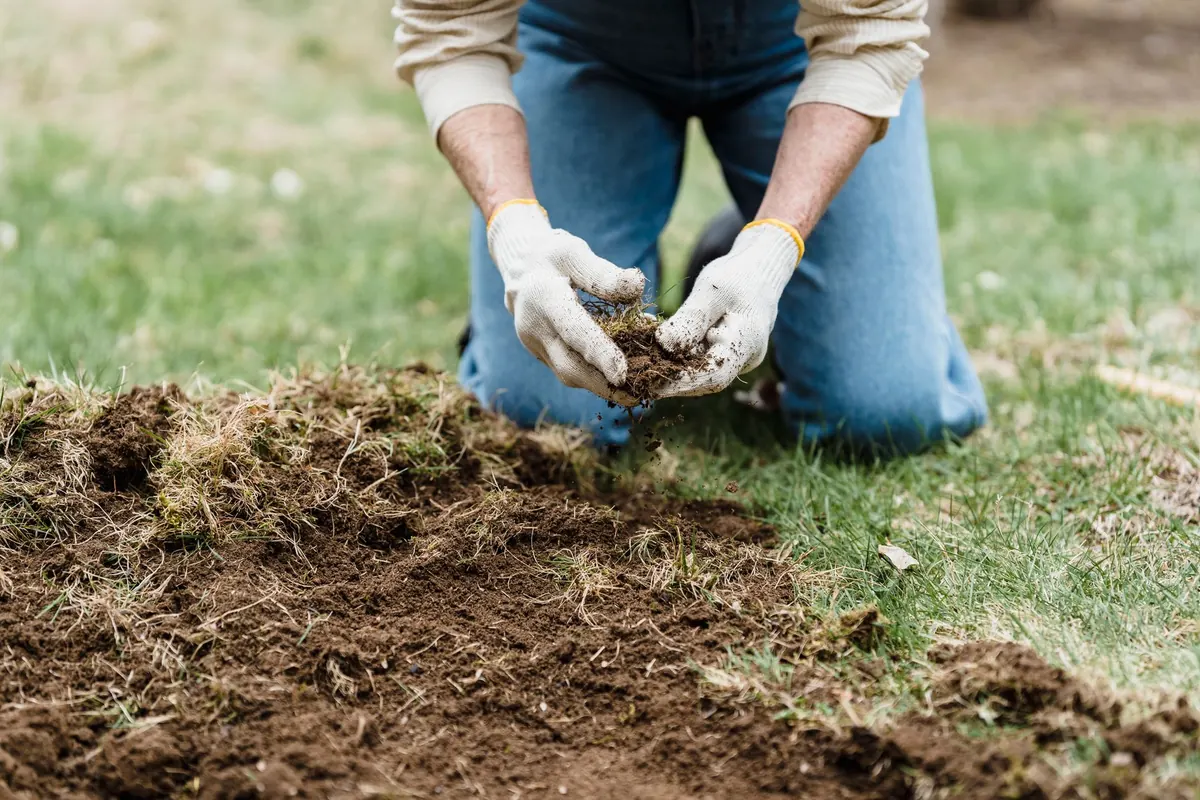
Photo: Greta Hoffman / Pexels