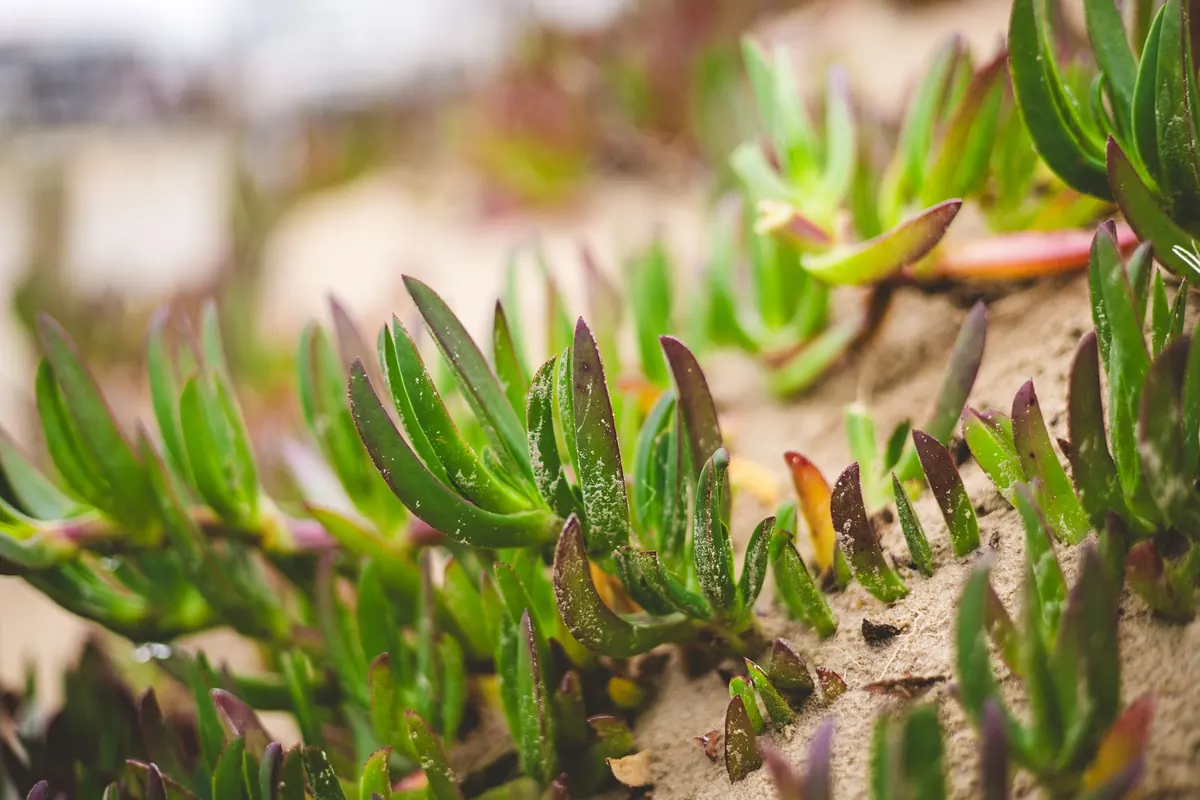
On an exposed coast, a windbreak is never really finished. Salt, sand-blast, winter gales and the odd summer scorcher all take their toll, and a hedge that shrugged off last year's weather can be thin, leaning or riddled with gaps twelve months later. The good news is that most problems announce themselves early if you know where to look. A walk round the garden after every big blow, plus a proper check twice a year, will keep your shelter belt doing its job: filtering wind rather than fighting it, and giving everything behind it a fair chance.
Why Coastal Windbreaks Fail Differently
Inland, hedges mostly die of neglect or bad pruning. On the coast, they die of physics. Wind carries salt and abrasive sand, which burns foliage and wears away the windward side of a hedge until it becomes lopsided. Sandy soils hold young plants loosely, so roots rock and tear in a gale. And because coastal winds often arrive from the same direction, the damage is relentless rather than occasional.
The golden rule is that a windbreak should be about half porous. A solid wall or an over-dense hedge forces wind up and over, creating damaging turbulence on the sheltered side. A semi-permeable screen slows the wind and lets some through. If your hedge has become a brick wall of foliage, it may be worth thinning it slightly rather than letting it thicken further.
After a Storm: The Damage Assessment
Wait for the wind to drop, then walk the whole length of the windbreak. Take secateurs and a notebook, and work through this in order:
- Check the roots, not just the top. Push the trunk or main stem gently. If the ground moves or you see a fresh crack at soil level, the plant has been wind-rocked. Firm it back in, stake it, and water it well.
- Look for leaning and gaps. A hedge that leans as a whole can often be pushed upright and re-staked. Individual gaps of a metre or more need patching, or wind will funnel through them.
- Inspect the structure. Fence posts rot at the base, wires snap at corners and wooden battens split. A screen flapping in the wind will shred itself within weeks.
- Assess leaf and needle damage. Brown, scorched foliage on the windward face is usually salt burn, not dead wood. Don't panic-prune it; wait until new growth appears in spring before making any cuts.
- Look up. Broken branches hanging in the canopy can drop later. Remove anything clearly snapped, cutting back to a healthy side shoot or the branch collar.
Pruning: Timing and Technique
Most coastal hedges want one main cut a year, with a tidy-up in late summer if they're vigorous. The exception is formal evergreens such as box or privet, which may need two or three light trims to stay crisp. Whatever you're cutting, avoid pruning between March and August where birds may be nesting — check for active nests before you start, as nesting birds are legally protected.
Cut to a taper, not a box
Shape matters as much as timing. Aim for a slight batter: wider at the base, narrower at the top, so light reaches the lower foliage and the whole face stays green rather than going bare and woody at the bottom. A flat-topped, vertical-sided hedge will thin out from the base within a few years.
Match the cut to the plant
- Privet, hawthorn, blackthorn, escallonia: tough and forgiving. Cut back hard in late winter or early spring; they'll regrow from old wood.
- Griselinia, pittosporum, olearia: good coastal evergreens, but don't cut into bare old wood — they rarely reshoot from it. Little and often is safer.
- Conifers such as macrocarpa or Leyland cypress: never cut beyond the green needles. Trimming only the current season's growth keeps them dense; cutting into brown wood leaves permanent holes.
- Tamarix and sea buckthorn: tolerate hard renovation if they've gone leggy, but do it in late winter so they have a full season to recover.
Sharpen your tools before you start. Blunt blades bruise stems, and bruised stems on a salt-laden coast are an open door for disease. Collect the clippings — a thick mat of cuttings at the base of a hedge smothers the very growth you want to encourage.
Repairing Screens, Stakes and Fencing
Living windbreaks get most of the attention, but artificial screens do a lot of quiet work, especially while a new hedge establishes. After winter, check every post for rot by pressing a screwdriver into the base. Replace any that give. Re-tension strained wires, and re-fix netting or reed screening that has come loose — a screen that has started to flap will be in tatters by the next gale.
Where a hedge has developed a gap, you have three options. You can fill it with a section of netting or brushwood screen as a stopgap. You can layer a nearby stem across the gap by bending it down and pegging it — a traditional technique that fills holes surprisingly quickly. Or you can plant a new specimen in the gap, using a sturdy stake and a tree shelter to get it through its first two winters.
Plant for the wind you get, not the wind you'd like. A slightly scruffy native hedge that survives beats a handsome tender one that doesn't.
Replacing a Windbreak That Has Given Up
Some windbreaks reach the point of no return: a conifer hedge with a bare, brown face, or a line of shrubs killed by repeated wind-rock and salt burn. If more than about a third of the run is dead or permanently bare, replacement usually beats patching.
The catch is that removing shelter exposes everything behind it. So do it in stages. Take out a section at a time and put up temporary netting or a brushwood screen before you replant. Improve the soil with well-rotted organic matter, and choose species proven on exposed coasts — griselinia, escallonia, olearia, pittosporum, hawthorn or sea buckthorn are all sensible starting points. Plant in autumn or early spring, water through the first two summers, and resist the urge to trim the new hedge hard until it has knitted together.
Your Seasonal Checklist
Spring: assess salt burn and wait for regrowth before pruning; repair stakes and ties; top-dress with mulch; plant replacements while the soil is warming.
Summer: trim fast-growing hedges lightly; check irrigation during dry spells; watch for gaps starting to open.
Autumn: the main planting window; firm in any wind-rocked plants before the gales arrive; check and re-tension screens and wires.
Winter: do structural pruning on tolerant species; replace rotten posts; after every gale, walk the line and deal with leaning, broken or uprooted plants within a few days.
Ten minutes of inspection after a storm, and one thorough session each spring and autumn, will keep a coastal windbreak working for decades. If your shelter belt is large, or forms part of a boundary you share with neighbours, it's worth taking professional advice before major removal or replanting — especially where trees could affect property or overhead lines.
Photo: Abenezer Muluken / Pexels