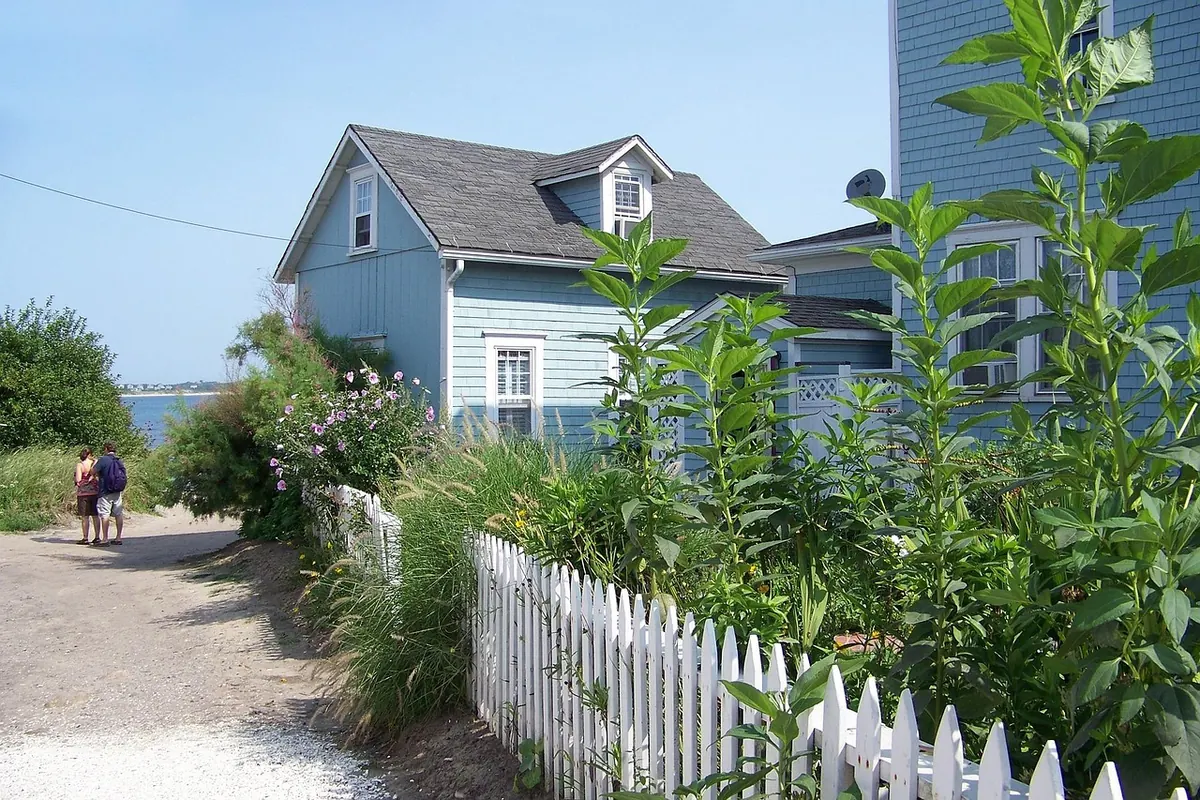
You can spot a coastal garden from a hundred yards: plants leaning away from the sea, leaves with brown scorched rims, soil that behaves like builder's sand, and a fence sandblasted back to bare wood. It can feel as though the odds are stacked against you. Yet the same plot may go years without a hard frost, catch light inland gardens never see, and suit a whole palette of silver, grey and leathery plants that sulk anywhere else. The difference between a constant struggle and a garden that works is nearly always how well you read the site before buying a single plant.
Read the Site Before You Read the Plant Catalogue
Give yourself a season of watching, or at least a few weeks plus honest conversations with neighbours who have gardened there longer. A coastal garden's problems are rarely uniform; they arrive in patches, and the bed three metres from the gate may behave quite differently from the one against the house.
- Prevailing wind. Across most of the UK that means south-westerly, but a headland, estuary or valley bends it. Watch which windows the rain hits.
- Distance from the shore, and height above it. Salt spray drops off quickly with distance and elevation, so a garden up a slope inland is a different proposition from one behind the sea wall.
- Where wind funnels. Gaps between buildings, a low gate, the alley between shed and hedge. These are the spots that shred tender growth.
- How the soil behaves. Does a spade slide in after rain and then bounce off a week later? Does water sit in the same hollow every winter?
- Frost pockets and warm corners. The sunniest, most sheltered spot is rarely the one you first assume.
After the next gale, walk round with a notebook. Plants scorched brown on their seaward side tell you exactly where salt lands and how far it carries.
Wind Comes First, Always
Everything else follows from shelter. Wind doesn't just snap stems; it strips moisture from leaves faster than roots can replace it, so plants that would shrug off dry soil inland collapse at the coast. Sorting out shelter before you plant the pretty things is the most useful decision you will make.
A solid wall is not the answer. It stops the wind dead and dumps it over the top in a tumbling eddy that can be more damaging than the original breeze. What you want is a permeable barrier — roughly half open, half solid — that filters and slows the air. A mixed hedge, a slatted fence or windbreak netting on sturdy posts all do this. On flat ground, useful shelter extends downwind for perhaps ten to fifteen times the height of the barrier, so a two-metre hedge protects a surprising length of garden. Leave room for it.
If you cannot wait three years for a hedge, put up temporary netting now and plant the permanent shelter behind it. Nobody notices netting in February.
Salt Is the Quiet Problem
Sea spray travels inland on the wind and burns foliage much as drought does: leaf tips and edges go brown, growth twists, evergreens lose their shine. It also builds up in the soil of exposed, sandy plots. Three habits help:
- Choose plants with waxy, hairy or narrow leaves that shed salt rather than absorb it.
- Rinse new plantings and containers with a hose after a strong onshore blow.
- Mulch bare soil so salt splash and drying wind do less damage at root level.
A permeable hedge earns its keep twice over here, trapping a good deal of spray before it reaches your borders.
Soil: Thin, Free-Draining and Often Alkaline
Coastal soils are frequently sandy or chalky, low in organic matter, quick to dry and quick to lose nutrients. Some are barely soil at all — a few inches over shingle or rock. Test the pH with a simple kit; it takes ten minutes and tells you whether acid-lovers such as camellias and rhododendrons are realistic or simply a waste of money. Then dig a hole, fill it with water and time how long it drains. Fast drainage is the coastal norm, and it shapes everything you plant.
The remedy is organic matter, added little and often. Well-rotted compost or manure dug in before planting, then a mulch each spring, holds moisture and slowly improves structure. Don't try to turn sand into clay; work with what you have. If the ground is genuinely shallow, raised beds or large containers are the honest answer, particularly for vegetables and soft herbs.
Seaweed makes a traditional coastal mulch, but rinse fresh weed well first so you aren't adding more salt to already salty ground.
Lay Out for Shelter, Then for Living
Think of the garden as zones that step down in toughness from the sea inward. The outermost strip takes the worst of it and wants the hardiest, lowest, most wind-shaped plants you can find. Behind that sits the shelter belt of shrubs and small trees. Only then do generous borders, cutting flowers and tender herbs belong.
Put the places you actually use — a bench, a table, a patch of lawn — in the most sheltered spot you have, usually tucked against a building or behind the hedge. A narrow gap between house and boundary makes an excellent sitting area; a wide terrace facing the sea is exhilarating in August and unusable in March.
Order of work:
- Establish boundary shelter, even if it is temporary netting to begin with.
- Improve and mulch the first bed you intend to plant, rather than tackling the whole garden.
- Lay paths and hard surfaces early, while you can still move materials about without trampling plants.
- Plant the windward edge first and work inland.
Pick Plants That Earn Their Place
Coastal planting is not about compromise. Sea thrift, sea kale, eryngium, lavender, rosemary, cistus, santolina and hardy geraniums all look better for a bit of wind. For structure, escallonia, griselinia, olearia, tamarisk and hardy fuchsia are the familiar workhorses of seaside gardens for good reason. Ornamental grasses bring movement that suits the setting far better than stiff bedding plants.
Buy small. A modest plant establishes faster than a large one and adapts to wind instead of being flattened by it. Autumn planting, while the soil is still warm, gives roots a head start before the gales arrive — though on heavy, wet ground, wait until spring.
Your First Season, Step by Step
Walk the plot in bad weather and photograph where the wind bites. Test pH and drainage. Get shelter in place. Mulch the first bed generously, plant small and plant thinly, then water thoroughly through the first two summers — new specimens need help even in a wet climate, because wind dries them faster than you would expect.
Finally, resist filling every gap in year one. Leave space to see what survives a winter, and let the garden show you what it wants to be. Coastal gardening rewards patience more than cleverness, and the plants that come through a February gale will still be standing in ten years.
Photo: desmarsol / Pixabay