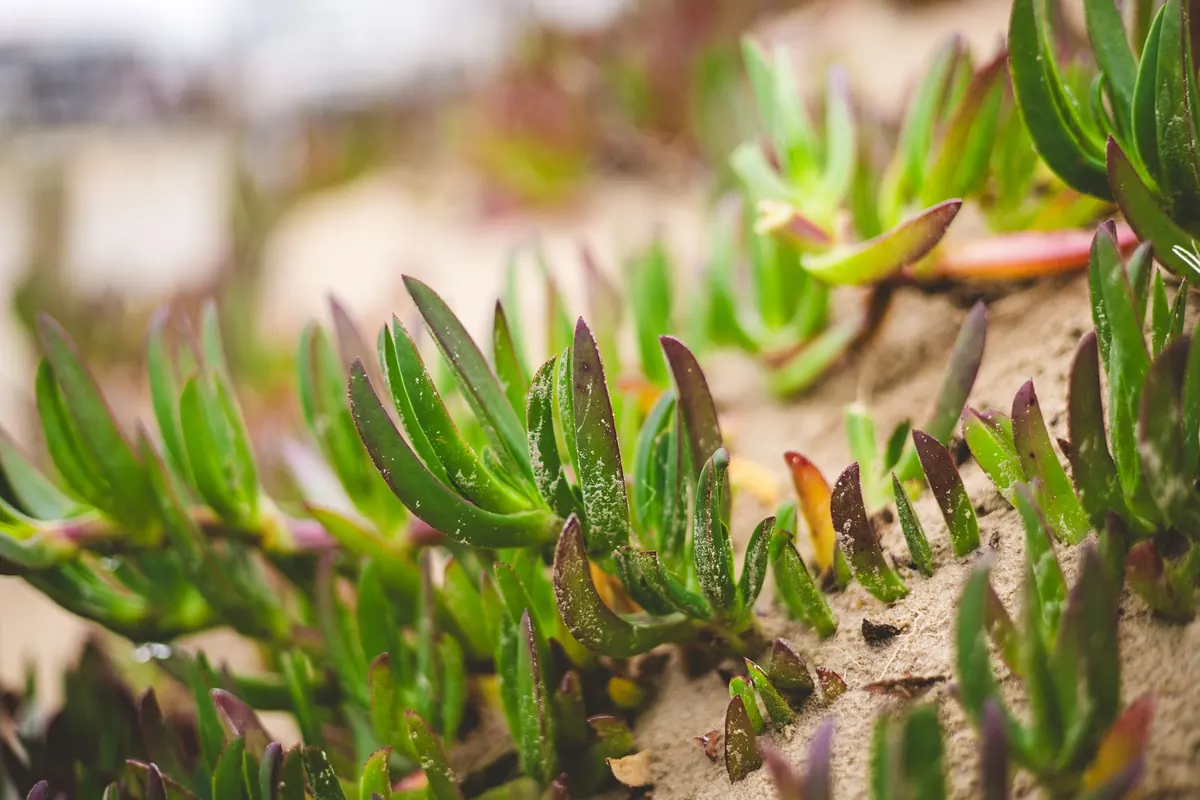
Sandy soil is the great give-and-take of coastal gardening. It drains in minutes, warms early, and lets you plant out while inland neighbours are still waiting for the ground to dry. It also loses water and nutrients almost as fast as you add them, so a row of lettuce that looked thriving on Friday can be limp by Monday lunchtime.
The answer is not a special fertiliser or a bag of mystery powder. It is organic matter, added steadily and often, until the top layer of your soil behaves less like a sieve and more like a sponge. Here is how to do it, in the order that makes sense.
What you are actually working with
Sand particles are large and roughly rounded, so they leave wide gaps between them. Water runs through those gaps under gravity, carrying soluble nutrients down and out of reach. That is why sandy soils are described as hungry: they are not short of minerals so much as incapable of holding on to them.
You will not turn sand into loam, and there is no point trying. What you can do is build a layer of humus through the top 20–30cm, where most roots actually feed. Humus holds water and nutrients, binds sand grains into crumbs, and gives seedlings something to grip. Expect a visible improvement in the first season and a genuine difference after two or three.
Start with compost, applied little and often
Sandy soil burns through organic matter quickly. It is warm, airy and full of oxygen, which is exactly what soil microbes want, so a single generous dose in spring will be largely gone by late summer. Regular smaller additions work far better than one heroic effort.
- Gather whatever you can: home-made compost, well-rotted horse or cattle manure, leafmould, spent mushroom compost. All are useful, and none of it needs to be perfect.
- Spread a 5cm layer over the bed in autumn, or in early spring on ground you want to crop straight away.
- Fork it into the top 10cm. There is no need to dig deeper — compost buried below the root zone is wasted.
- Plant or sow straight into it. Worms and roots will finish the mixing for you.
- Repeat every year, and top up with a mid-season mulch around hungry crops such as courgettes, beans and brassicas.
If your plot slopes, work across the slope rather than up and down it. Compost spread on a gradient tends to leave with the first heavy rain.
Seaweed: the free resource on your doorstep
Seaweed is the coastal gardener's advantage. It is not a balanced fertiliser and it will not replace compost, but it is a first-rate soil conditioner, rich in potash and trace elements, and it breaks down into exactly the dark, crumbly material sandy soil lacks.
Collect it sensibly. Loose weed washed up along the strandline is the usual target, and it is better taken in small amounts from several places than stripped from one. Leave living plants attached to rocks alone; they are the growing crop. Check local byelaws and any site designations before filling a sack, and never clear a beach.
Three ways to use it
- Fresh mulch: spread a 5–8cm layer on the surface and let worms pull it down. Rinse it first if the salt worries you, though a little salt is rarely a problem on an exposed coastal plot and rain will wash it through.
- Compost ingredient: mix it with grass clippings, cardboard and kitchen waste. Fresh seaweed is high in nitrogen and gets a sluggish heap moving.
- Liquid feed: steep a sack of seaweed in a water butt for a few weeks, then dilute the dark liquid until it looks like weak tea and use it on leafy crops and tomatoes.
Mulch to keep moisture where it belongs
Bare sand bakes and blows. A mulch layer does three jobs at once: it cuts evaporation, keeps the surface cool, and slowly feeds the soil beneath. Use whatever you have to hand — garden compost, bark, straw, spent hops, wool pellets, coir, or grass clippings in thin layers so they do not mat.
Apply 5–7cm, and water the ground first rather than after. Keep mulch clear of stems and trunks to avoid rot and slug damage. In windy spots, heavier materials stay put better; a light compost topping may need a scatter of something chunkier over it.
Green manures for the gaps
An empty bed is a leaking bed. Sow something to cover the ground over winter or in the weeks between crops, and you keep nutrients in the root zone instead of in the water table. Field beans and crimson clover fix nitrogen; grazing rye, phacelia and buckwheat bulk up organic matter quickly and feed pollinators while they are at it.
Cut them down before they set seed, leave the tops on the surface as a mulch, and let the roots rot where they are. On light sand this single habit can do as much for structure as a barrow of compost.
Planting tricks that buy you time
While the soil is still improving, a few small habits carry plants through the lean first seasons.
- Plant into pockets: fill each planting hole with compost and a handful of well-rotted manure.
- Water deeply and less often, rather than little and often. It encourages roots downwards, where the moisture is.
- Group thirsty plants together so one watering session does a proper job.
- Give the plot a windbreak. Wind dries leaves and soil faster than sun does, and a hedge of griselinia, escallonia or sea buckthorn — or even a woven fence — makes a real difference.
- Grow the fussiest crops in containers or raised beds filled with a loam-based compost, and treat the open ground as a longer project.
Keeping it going
Coastal soil rewards persistence more than cleverness. The gardener who adds a barrow of compost each year, mulches in June, collects seaweed after a gale and sows a green manure in September ends up with ground that holds water and feeds plants, without ever buying a bag of miracle anything.
Start with one bed. Spread the compost, cover the surface, and see how it looks by August. Then do the next bed, and the next. Two or three seasons of this and you will be picking up soil that holds together in your hand instead of running through your fingers.
Photo: Pok_Rie / Pixabay